Start here
Is St Anne's concert worth it?
What a period-instrument concert is, what you hear in St Anne's Church in Vienna, the seats, the music and who it suits, with sources for every fact.
Book the St Anne's concert ↗Quick answer
Yes, if you want chamber music by Haydn, Mozart, Beethoven or Schubert played on instruments from their time, in a small Baroque church in central Vienna. A period-instrument concert aims to match the style of the era in which the music was written, usually with gut strings and a lower tuning. This one runs about 70 minutes with free seating. It is not a full orchestra, an opera-house evening or a reserved-seat show.
The short answer
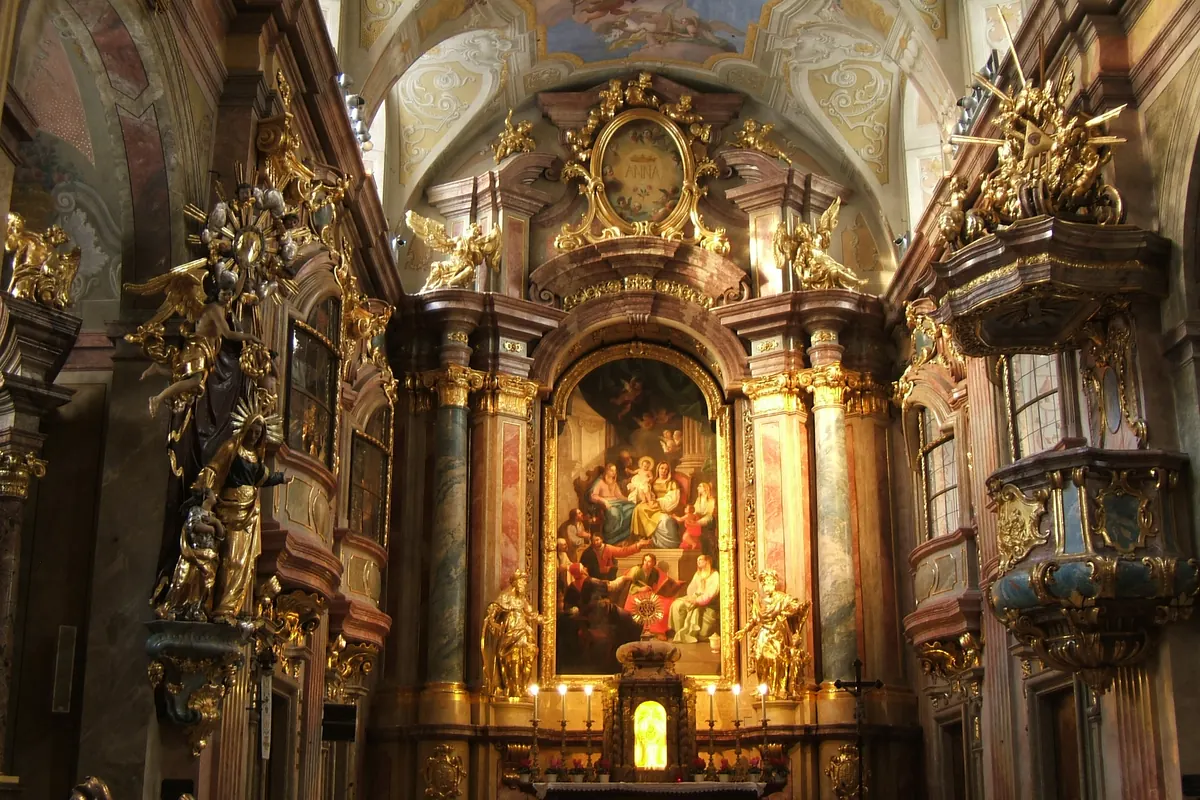
Worth it for the right listener. The music is the core of Viennese Classical chamber repertoire, by Haydn, Mozart, Beethoven or Schubert, and the booking page says it is played on period instruments. The room is a Baroque church with a painted ceiling, and about 70 minutes is short enough to sit comfortably before or after dinner. It is a concert rather than a spectacle: a string ensemble, with no orchestra, singers or staging mentioned on the booking page.
- Book it for Classical chamber music in a historic room
- Book it if about 70 minutes is the length you want
- Look elsewhere for a full orchestra or a reserved seat
What the concert is
The concert is held in St Anne's Church at Annagasse 3B and lasts about 70 minutes. The booking page describes a string ensemble of musicians from renowned Viennese orchestras, playing complete works by Haydn, Mozart, Beethoven or Schubert on period instruments. Seating is free, so no seat number is assigned, and a free printed programme comes with the ticket. The page names composers but not pieces, so the programme changes with the date you pick, and the start time is on your confirmation. Wikipedia's article on the era notes that composers of the time left much to the player: they assumed the player would choose the tuning system and never indicated it in the score.
What period instruments means
Period instruments are instruments of the kind a composer knew, or modern copies of them. Wikipedia defines historically informed performance as an approach that aims to be faithful to the manner and style of the era in which a work was written. The usual differences are gut strings in place of steel, bows of a different shape and a lower tuning: A at 440 Hz has been the usual modern standard since 1939, while Classical-period instruments such as the fortepiano are tuned to 427 or 430 Hz. Wikipedia adds that written ornaments such as the appoggiatura are often meant to be longer or shorter than the score suggests, which is part of what a historically informed player studies.
Read next: Period instruments, explained
The music: four composers tied to Vienna
Haydn moved to Vienna in 1740 as a boy chorister and came back in 1795 after his years at the Esterházy court. Mozart was dismissed by his Salzburg employers in 1781 and made Vienna his home until he died. Beethoven studied with Haydn there, and Schubert was born in a suburb of the city in 1797. Haydn died in Vienna in 1809, Mozart in 1791 at the age of 35 and Schubert in 1828 at 31, so the whole of this repertoire belongs to a few crowded decades in one city. Wikipedia calls Haydn, Mozart and Beethoven the First Viennese School and notes that Schubert is sometimes added to the list.
Read next: Mozart's and Schubert's Vienna
Why a string ensemble
A string quartet has four players: two on violin and one each on viola and cello. Haydn developed the form into its present shape, Wikipedia says, and his Op. 20 of 1772 is described as the first major peak in its history. Mozart, Beethoven and Schubert each wrote masterpieces for it: 23 quartets by Mozart, 16 by Beethoven and 15 by Schubert. The booking page does not say how many players appear, so read a quartet as the typical format and not as a promise. A Classical quartet usually has four movements: a fast opening, a slow movement, a minuet or scherzo, and a fast finale.
The church itself
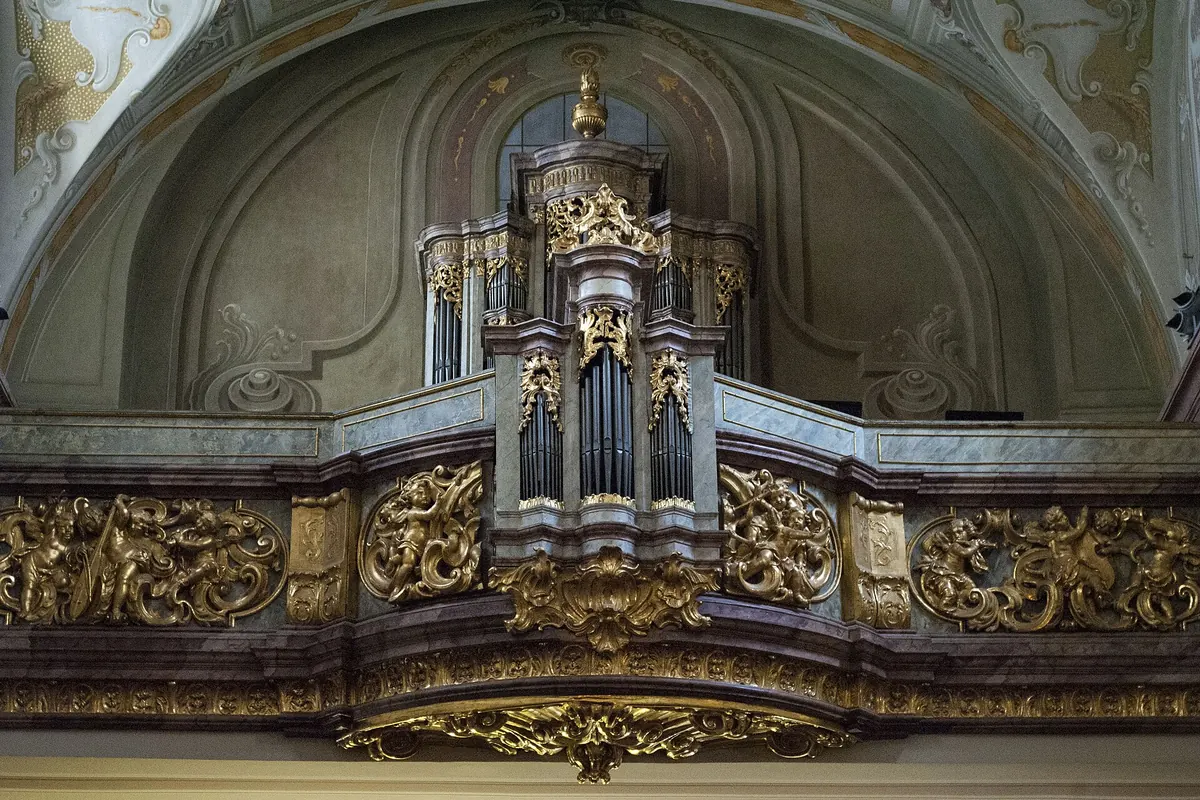
The Wien Geschichte Wiki describes a single-nave hall church with a barrel vault and three chapels on each side. A chapel to St Anne was built around 1510 or 1520, and the Jesuits, who took over the complex in the late 16th century and set up a novitiate there in 1627, rebuilt the church in the Baroque style between 1629 and 1634. A lightning fire on 25 June 1747 destroyed the tower and roof. Today the church is in the care of the Oblates of St Francis de Sales.
The ceiling and the altar
The Baroque interior was led by Christoph Tausch, a Jesuit brother and painter who had studied with Andrea Pozzo, with help from Daniel Gran. Gran, born in Vienna in 1694 and appointed court painter in 1727, painted the ceiling frescoes, which the Wien Geschichte Wiki dates to 1747 and 1748, and the high altar picture of the Holy Family. His ceiling paintings in the court library, now the Austrian National Library, were finished in 1730. Wikipedia describes the frescoes as showing the glory of St Anne, the glory of the Virgin Mary and the glory of the newborn Christ Child. A carved wooden group of St Anne from about 1510 survives from the Gothic furnishings.
How the evening runs
Arrive early if you want a seat near the front, because the seating is free. The concert lasts about 70 minutes and your confirmation carries the start time. The church is heated in the cold months of the year. No dress code is set on the booking page, and the ticket covers the free programme but not food, drink or transport, so plan any meal around the concert. Seats are not numbered, so groups wanting to sit side by side should arrive together. Phones belong in a pocket once the music begins, because in a room this small a raised screen blocks the view behind it.
Seats, comfort and what visitors write
The seats are church benches. On the booking page, where the concert scores 4.6 from about 3,900 reviews, individual write-ups call the benches hard, say the side seats are easier than the central bench and mention other people filming during the concert. Others mention a quartet playing Schubert's Death and the Maiden and an extra piece after long applause. Plan for a side seat, layers and about 70 minutes of sitting. The page gives no accessibility information, so check with the organiser before paying if you have mobility needs.
Who this isn't for
Skip it if you want a reserved seat, a padded seat or an orchestra. Skip it if you want opera, singers or a show with costumes and staging, because the Golden Hall evening in the comparison guide is closer to that. And skip it if you want to hear a named performer or a fixed list of pieces, since the booking page promises composers and instruments, not a programme. Nor is it for anyone expecting dinner, because the ticket covers neither food nor drink.
Read next: St Anne's or the Golden Hall?
How to book
Choose a date on the booking calendar, pick your language and currency, and read the start time on the next screen. The page shows a 24-hour cancellation window and a pay-later option. Seating is free, so arriving early matters more than booking early. If you are weighing it against another Vienna evening, read the comparison guide before you pay. If your preferred night is not on the calendar, try the evening before or after.
Frequently asked questions
Is the St Anne's Church concert worth it?
Yes, if you want Haydn, Mozart, Beethoven or Schubert on period instruments in a small Baroque church. It lasts about 70 minutes. It is not a full orchestra or a reserved-seat show.
What are period instruments?
Instruments of the kind a composer knew, or modern copies of them. Typical differences from modern ones are gut strings, lighter bows and a lower tuning.
Is the same programme played every night?
No. The booking page names the composers, not the pieces, so the programme varies by date. A free printed programme comes with the ticket.
Is there an interval?
The booking page gives about 70 minutes and mentions no interval. Check your confirmation if it matters to you.
Is the church heated in winter?
Yes. The booking page says the church is heated in the cold months of the year.
Who painted the ceiling of St Anne's Church?
Daniel Gran painted the ceiling frescoes, which the Wien Geschichte Wiki dates to 1747 and 1748, along with the high altar picture of the Holy Family.
Sources